
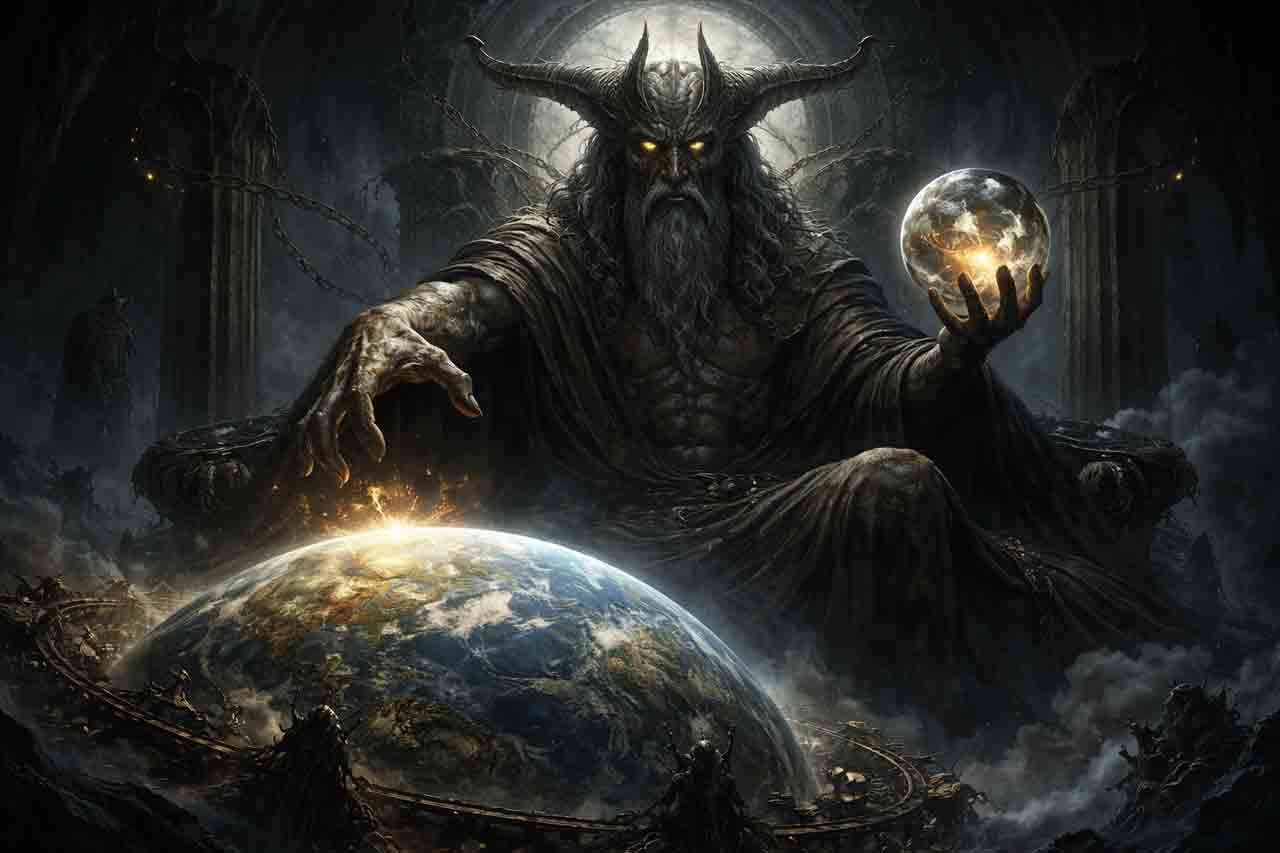
In ancient texts rediscovered in Egypt, the demiurge appears as an inferior creator linked to matter, ignorance, and one of the most unsettling myths of Antiquity.
By Aelius Varro
Among the most enigmatic names in the Gnostic tradition, few arouse as much curiosity as the demiurge. In many strands of Gnosticism from the first centuries of the Christian era, he is not the supreme God, but a lesser creator responsible for shaping the material world — a universe seen not as a perfect work, but as the result of failure, separation, and spiritual ignorance.
This image gained strength especially in texts such as the Apocryphon of John, preserved among the manuscripts found near Nag Hammadi, Egypt, in 1945. This collection of Coptic codices revealed dozens of works that helped scholars better understand Gnostic cosmologies, including narratives in which the visible cosmos emerges beneath a higher and transcendent divine reality.
In these traditions, the demiurge is often associated with the name Ialdabaoth. According to academic summaries of these narratives, he is born from an irregular act of Sophia, Wisdom, and goes on to create the material world without understanding the fullness of the divine realm above him. Rather than representing absolute perfection, he appears as a figure marked by arrogance and limitation, sometimes treated as a dark parody of the creator god in a literal reading of Genesis.
That is precisely where the Gnostic myth becomes so disturbing. For these traditions, humanity carries within itself a spark of higher origin, but lives forgetful of its true source, trapped in matter, time, and the structures of this world.
Salvation, therefore, would not come from faith alone, but from awakening — gnosis, a revelatory knowledge capable of breaking spiritual amnesia and reminding the soul where it came from.
The modern fascination with the demiurge arises from this rare combination of philosophy, religion, and metaphysical suspense. He is not merely an ancient character: he has become the symbol of a question that has echoed across the centuries. What if the visible world were not the final reality, but only the shadow of something far greater?
It is this doubt, echoing from ancient manuscripts to the contemporary imagination, that keeps the demiurge at the center of some of the most mysterious interpretations ever produced about the origin of existence.
