
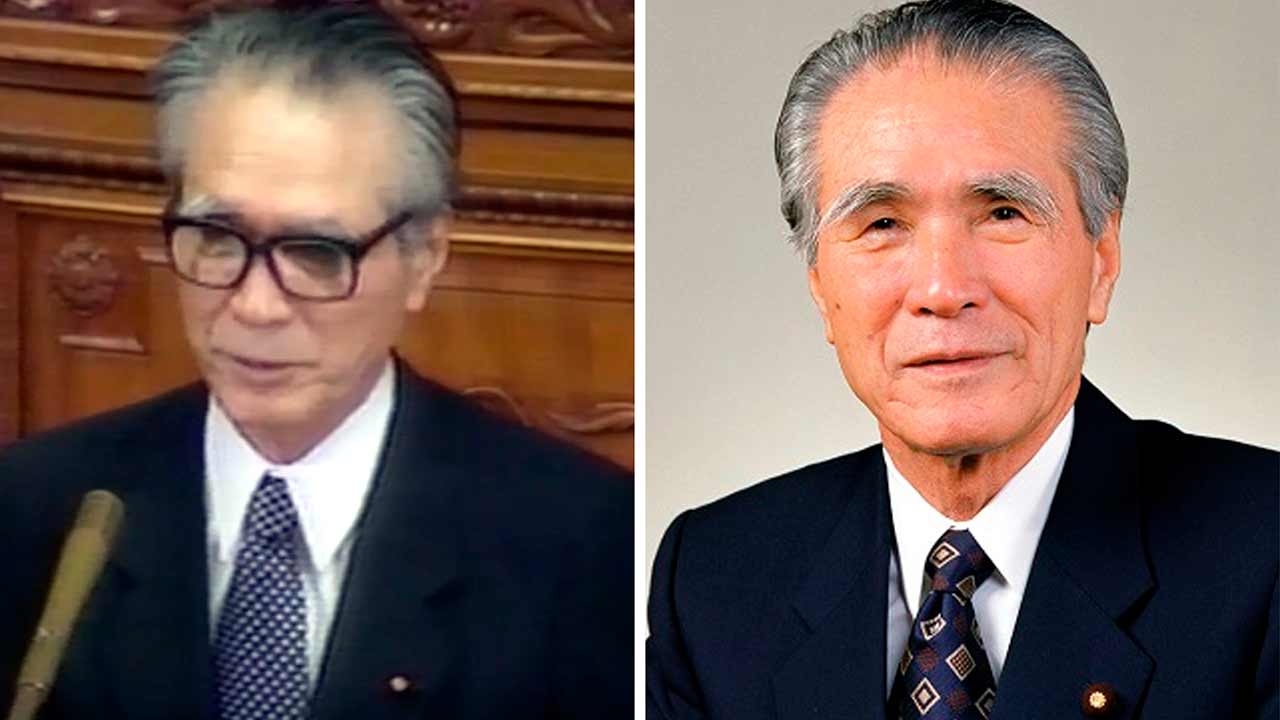
Former Japanese Prime Minister Tomiichi Murayama passed away on the morning of Friday (17) at the age of 101, at a hospital in his hometown of Oita. The cause of death was attributed to old age, according to local broadcaster OBS Oita.
Born on March 3, 1924, Murayama was the sixth of eleven siblings. After studying at Meiji University in Tokyo and serving in the army during World War II, he returned to Oita and began his political career with the Japan Socialist Party.
Before entering the national Parliament, he served as a city councilor and as a member of the Oita Prefectural Assembly. In 1972, he was elected for the first time as a member of the House of Representatives. Throughout his career, he held key positions within the party, including chairman of the National Committee and director of the Budget Committee.
On June 29, 1994, Murayama became Japan’s 81st prime minister, leading a rare coalition between the Socialist Party and the traditionally rival Liberal Democratic Party. His rise to power marked a major turning point in Japanese socialist politics, as he accepted the Japan–U.S. security alliance, the constitutionality of the Self-Defense Forces, and the use of the national flag.
During his tenure, Japan faced the 1995 Great Hanshin-Awaji Earthquake and the Tokyo subway sarin gas attacks carried out by the Aum Shinrikyo cult. Murayama faced heavy criticism for the government’s slow initial response to the natural disaster, but he is best remembered for the Murayama Statement, issued in August 1995, in which he expressed “deep remorse and heartfelt apology” for the damage and suffering Japan had caused to other nations, particularly in Asia, during its period of colonization and wartime aggression.
His administration lasted 561 days, marked by political challenges and major national crises. Murayama retired from public life in 2000. Upon turning 100 in 2024, he said in an interview:
“I don’t feel like I’m 100 years old. I think the secret is to live naturally, without excess. I’m happy to be able to spend my days with my family.”
Tomiichi Murayama will be remembered as the leader who sought to reconcile Japan with its past and promote a policy rooted in humility and peace.
Photo: Wikimedia
