
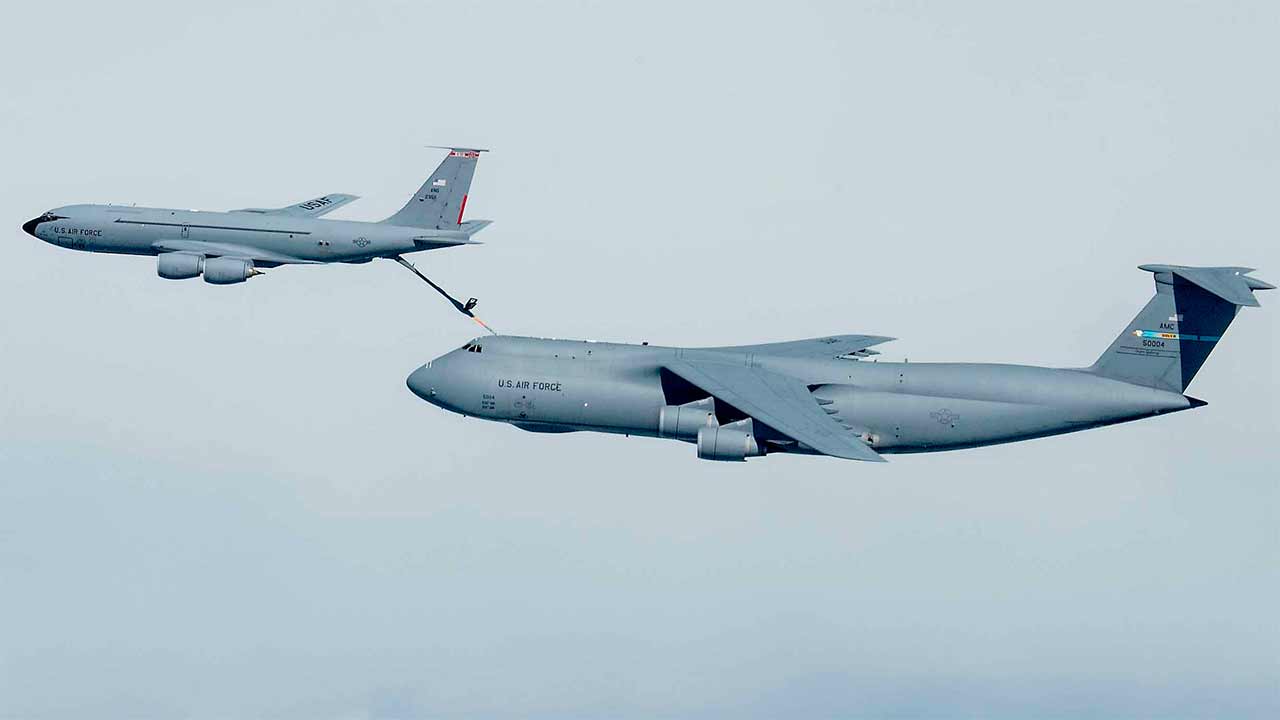
The Boeing KC‑135 Stratotanker has remained the U.S. Air Force’s primary aerial refueling tanker aircraft since its first flight on August 31, 1956, and entry into service in June 1957, derived from the Boeing 367‑80 prototype.
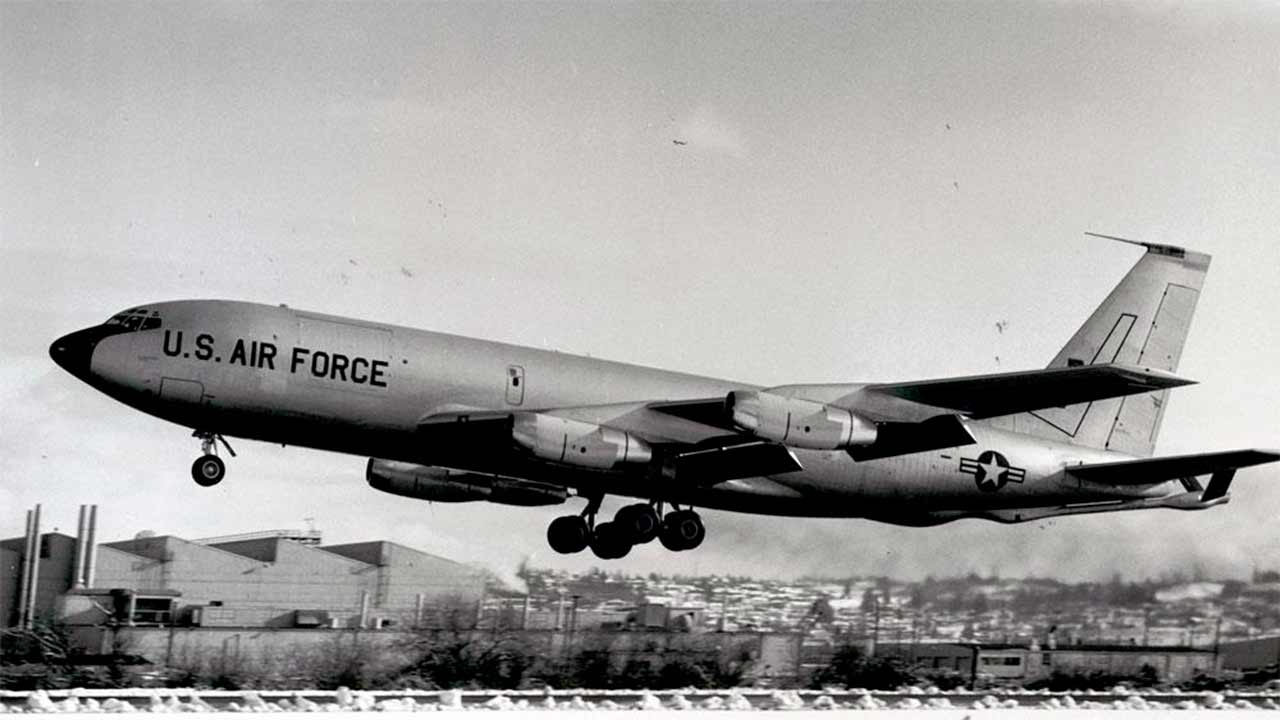
Technical Specifications
- Engines: four CFM56 turbofans in the “R/T” model, with approximately 21,600 lbf of thrust each
- Fuel capacity: up to 200,000 lb (~90,700 kg)
- Additional load: up to 83,000 lb (~37,650 kg) of cargo/passengers
- Maximum speed: around 933 km/h (Mach 0.9)
- Range: remains in service with projected capability until 2050 or beyond, with studies to extend its life to 100 years due to an ambitious modernization plan
The Stratotanker is equipped with a manually operated “flying boom” system, supplemented by a drogue mechanism to refuel partner aircraft, and can transfer tens of thousands of pounds of fuel mid-air. This makes it essential for extending the range and mission time of fighters, bombers, and ISR aircraft.
Upgrades and Durability
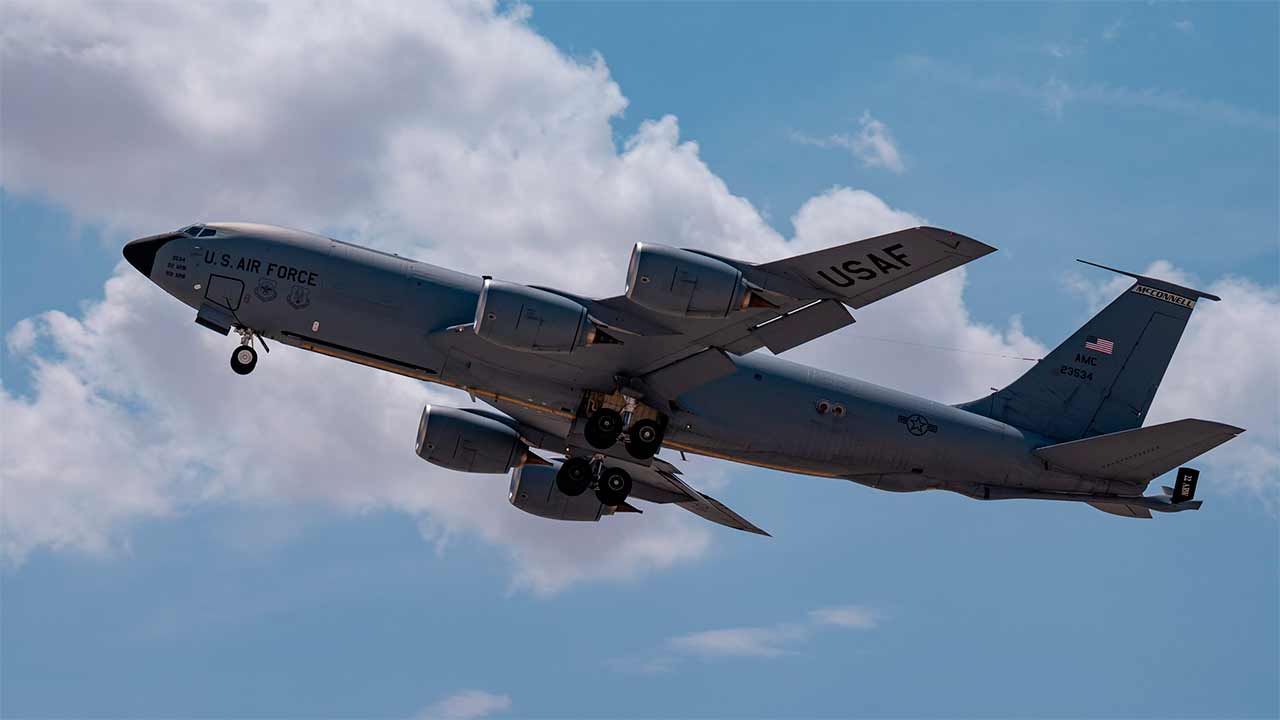
The Pacer‑CRAG program (1999–2002) modernized avionics and eliminated the navigator position. Block 45 (completed in 2017) introduced a digital cockpit, autopilot, and updated instrumentation. With CFM56 engines, the KC‑135R and T variants offer up to 50% more refueling capacity and 25% better fuel efficiency compared to older versions, while also being quieter.
Operational Continuity
- In continuous service for over 66 years, making it the oldest tanker still in operation
- Participated in conflicts such as Vietnam and Desert Storm, extending both strategic and tactical reach
- Supplemented by the KC‑46 Pegasus, but the fleet is expected to remain active until at least 2050
The KC‑135 is regarded as America’s “flying gas station” — a true force multiplier, enabling global air operations without compromising payload or mission duration. Its ability to carry cargo and passengers also adds flexibility to humanitarian and logistical missions.
Source and images: X @BoeingDefense | Air Mobility Command X @AirMobilityCmd. This content was created with the help of AI and reviewed by the editorial team.
