
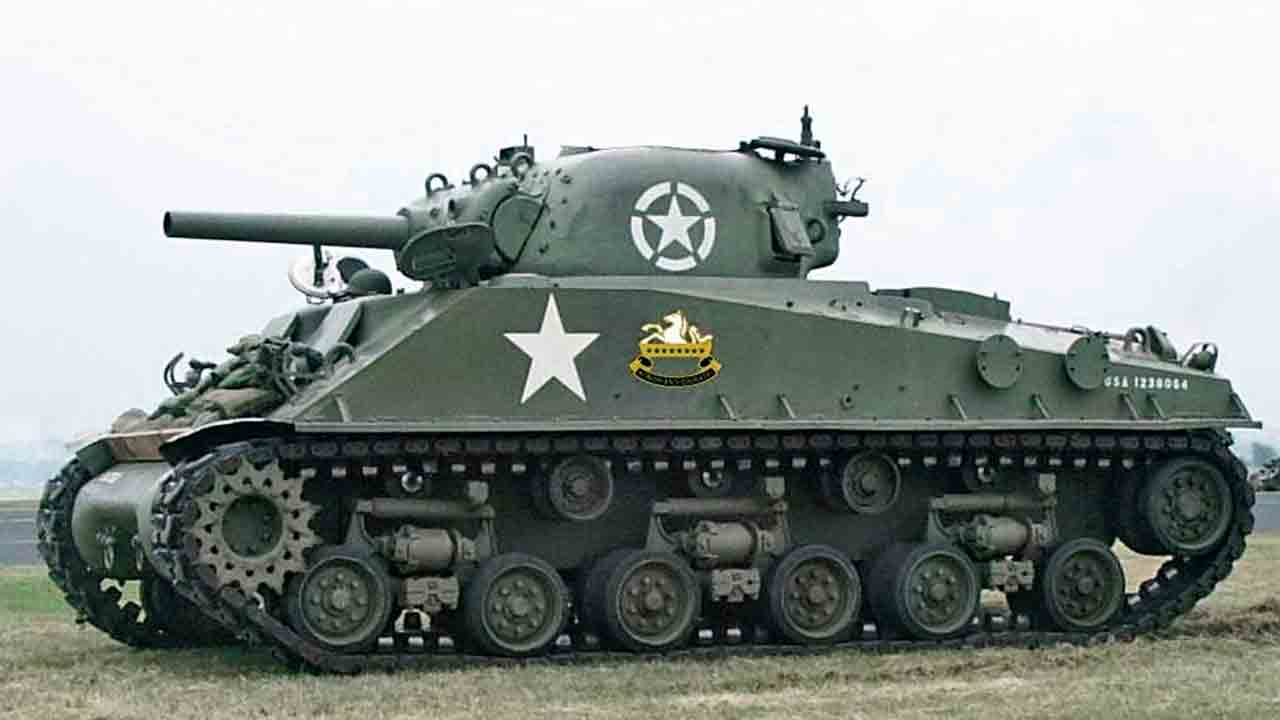
An iconic Allied vehicle on the battlefield, the M4 Sherman was the most produced tank of World War II and a symbol of the offensive against Nazism
Among the many symbols of World War II, few are as widely recognized as the M4 Sherman. Mass-produced by the United States, the Sherman became the main battle tank used by Allied forces — especially the Americans and British — in combat across Europe and the Pacific. Despite criticism over its relatively modest armor and firepower, its reliability, ease of maintenance, and overwhelming numbers made it a key asset in the defeat of the Axis powers.
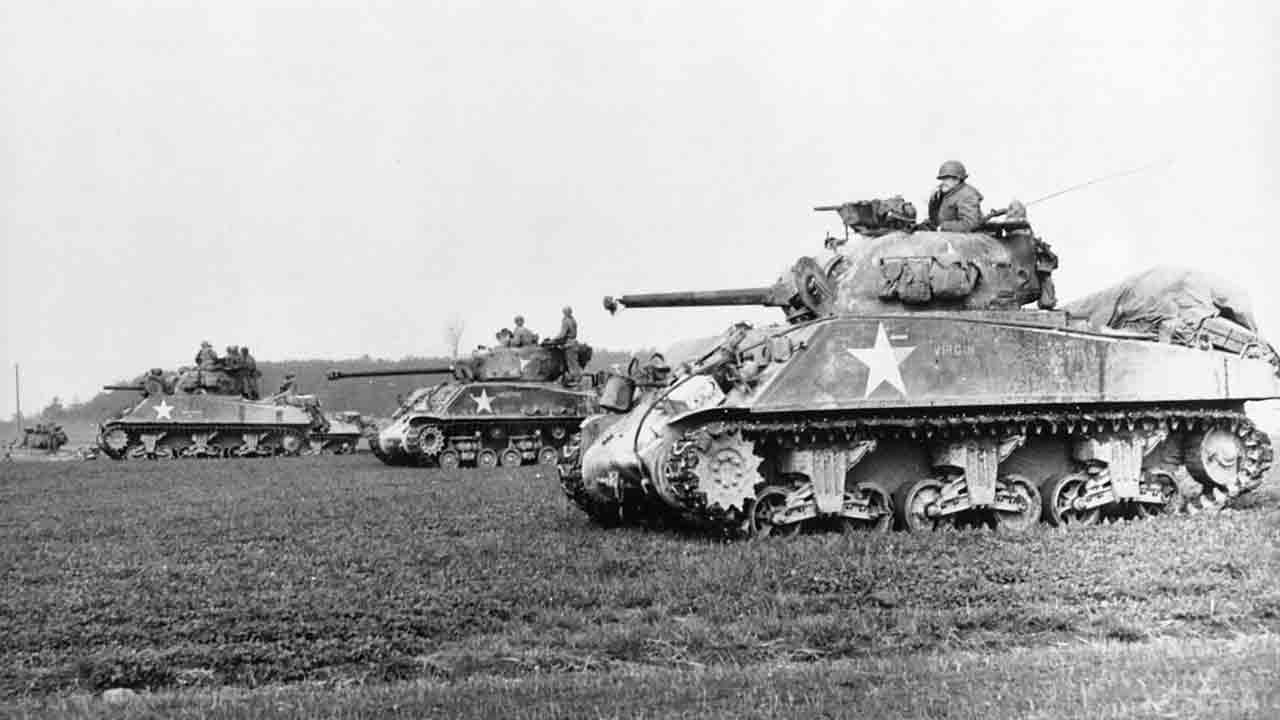
Origin and Development
The M4 Sherman was developed in the early 1940s to replace the M3 Lee, which had shown limitations in combat. The goal was to design a more balanced medium tank that could be produced in large quantities with standardized parts. The name “Sherman” was given by the British, in honor of American Civil War General William Tecumseh Sherman.
M4 Sherman Technical Specifications
- Type: Medium tank
- Country of origin: United States
- Crew: 5 (commander, gunner, loader, driver, and radio operator)
- Main armament: 75 mm M3 gun (some versions had 76 mm guns or 105 mm howitzers)
- Secondary armament: Browning machine guns (.50 and .30 caliber)
- Armor: Between 38 mm and 76 mm
- Engine: Various versions, including radial gasoline engines and diesel engines
- Maximum speed: Approximately 40 to 48 km/h
- Operational range: About 160 to 240 km
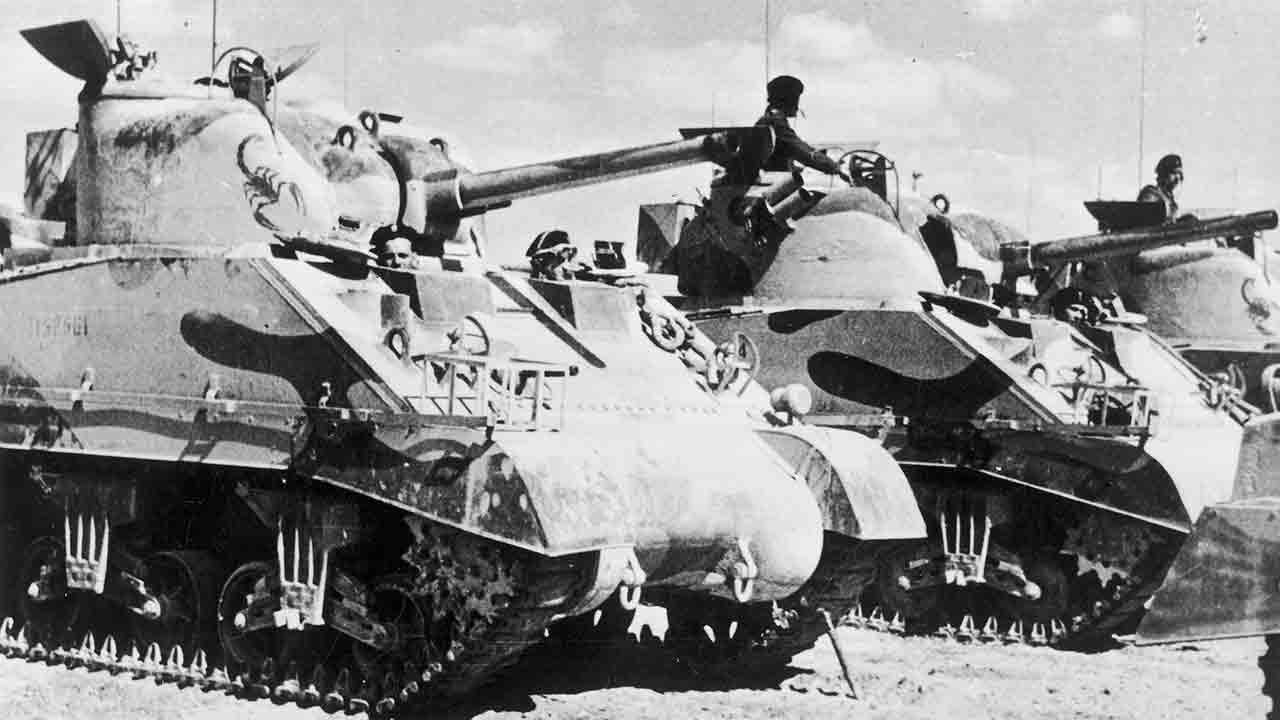
Production and Combat Use
More than 49,000 units of the M4 Sherman were produced between 1942 and 1945, making it the most manufactured Allied tank of World War II. It was widely used in major campaigns such as the D-Day landings, the liberation of France, the Italian campaign, and battles in the Pacific Theater against Japan.
While outgunned and out-armored by German Tiger and Panther tanks, the Sherman benefited from superior logistics, tactical agility, and sheer numbers. A single Tiger might destroy a Sherman from a distance, but the Allies countered with group tactics and air support to neutralize the threat.
Interesting Facts About the Sherman
- The M4 Sherman earned both respect and criticism: soldiers nicknamed it the “Ronson” (a lighter brand) because of its tendency to catch fire when hit.
- Several variants were adapted with flamethrowers, mobile bridges, and amphibious minesweepers for diverse operations.
- The Sherman continued in service after World War II, including in the Korean War, and remained in use by some Allied nations into the 1970s.
- The Firefly model, developed by the British, was equipped with a 17-pounder anti-tank gun — powerful enough to take on German heavy tanks more effectively.
- Today, Shermans can still be seen in museums, war films, and commemorative military events, such as the one attended by 98-year-old British veteran Ken Turner.
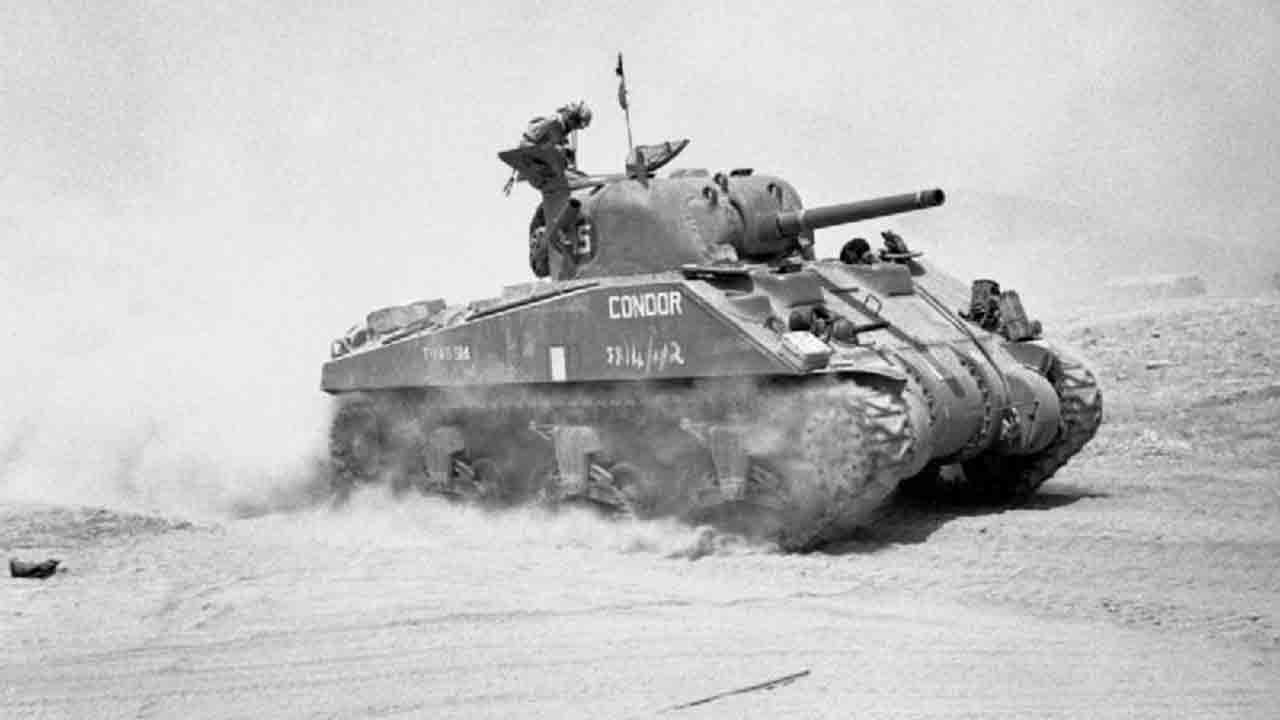
Legacy
More than just a war machine, the M4 Sherman became a symbol of the fight for freedom. Its ruggedness, mechanical simplicity, and decisive role in the Allied victory ensure its place as one of the most important tanks in 20th-century military history.
Sources: U.S. Military Archives, Imperial War Museum, Tank Museum Bovington.
