
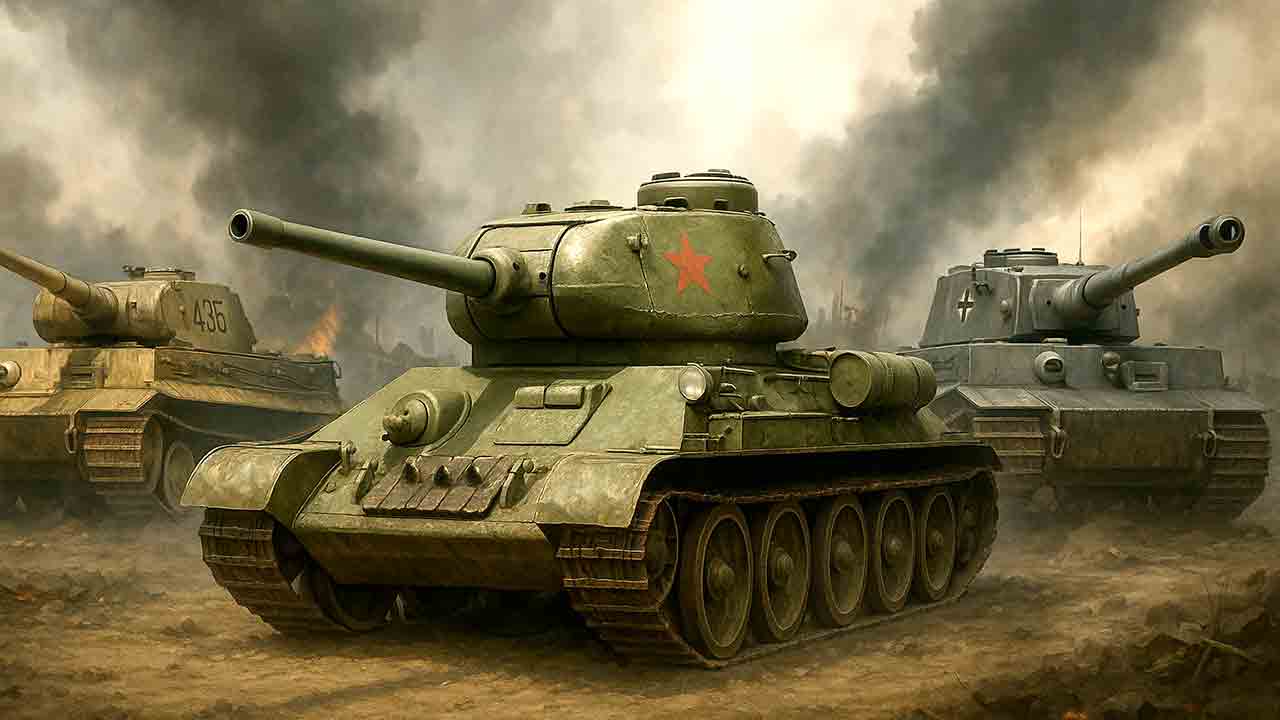
During World War II, tanks played a crucial role on the battlefield, serving as a cornerstone of the military strategies of the involved nations.
Among the most iconic models were the Soviet T-34-85 and the German Panther and Tiger I tanks. Each vehicle had distinct features that reflected the doctrines and needs of their respective armies.
Technical Comparison: T-34-85 vs. Panther vs. Tiger I
| Specification | T-34-85 | Panther (Panzer V) | Tiger I (Panzer VI) |
|---|---|---|---|
| Type | Medium tank | Medium tank | Heavy tank |
| Crew | 5 | 5 | 5 |
| Weight | 32 tons | 44.8 tons | 57 tons |
| Armor | Up to 90 mm (turret) | Up to 120 mm (front) | Up to 120 mm (front) |
| Main Armament | 85 mm ZIS-S-53 gun | 75 mm KwK 42 L/70 gun | 88 mm KwK 36 L/56 gun |
| Top Speed | 55 km/h | 46 km/h | 38 km/h |
| Operational Range | Approximately 350 km | Approximately 250 km | Approximately 195 km |
| Total Production | About 48,950 units | About 6,000 units | About 1,347 units |
Comparative Analysis
T-34-85:
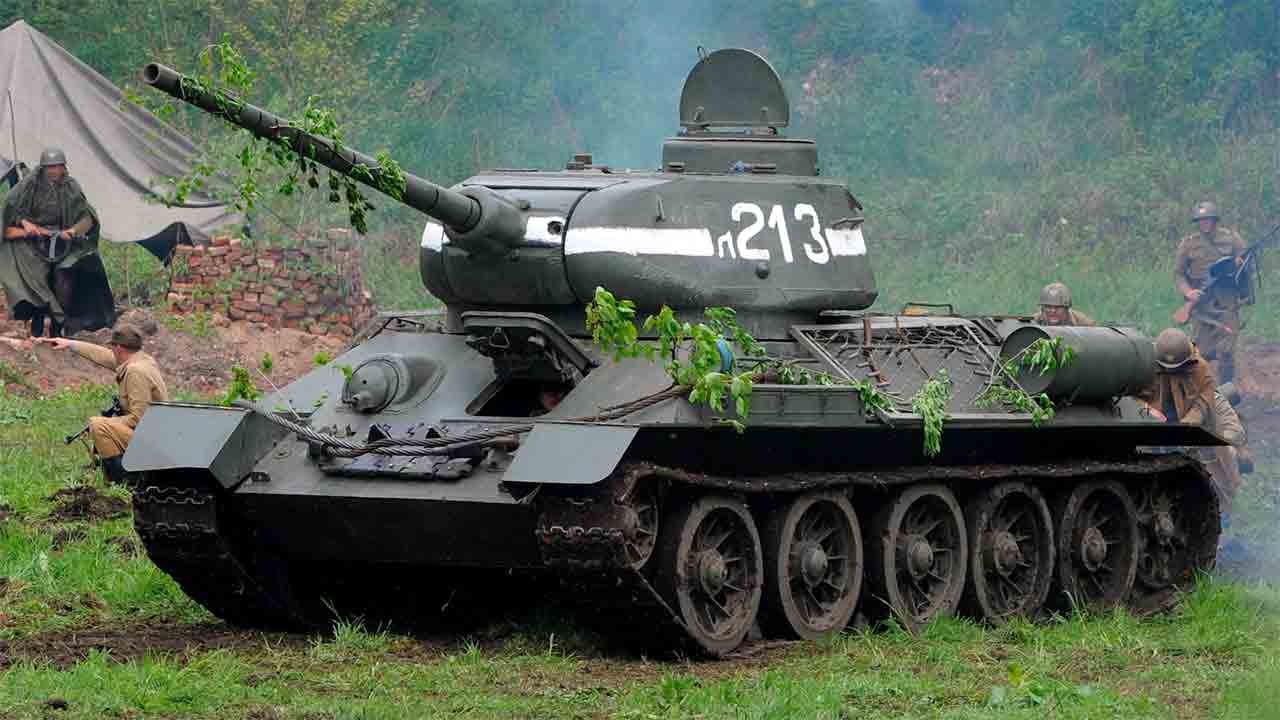
An evolution of the original T-34, the T-34-85 featured a more powerful 85 mm gun and enhanced armor while retaining the mobility and ease of production that characterized its predecessor. Its mass production and easy maintenance made it one of the most effective tanks of the conflict.
Panther:
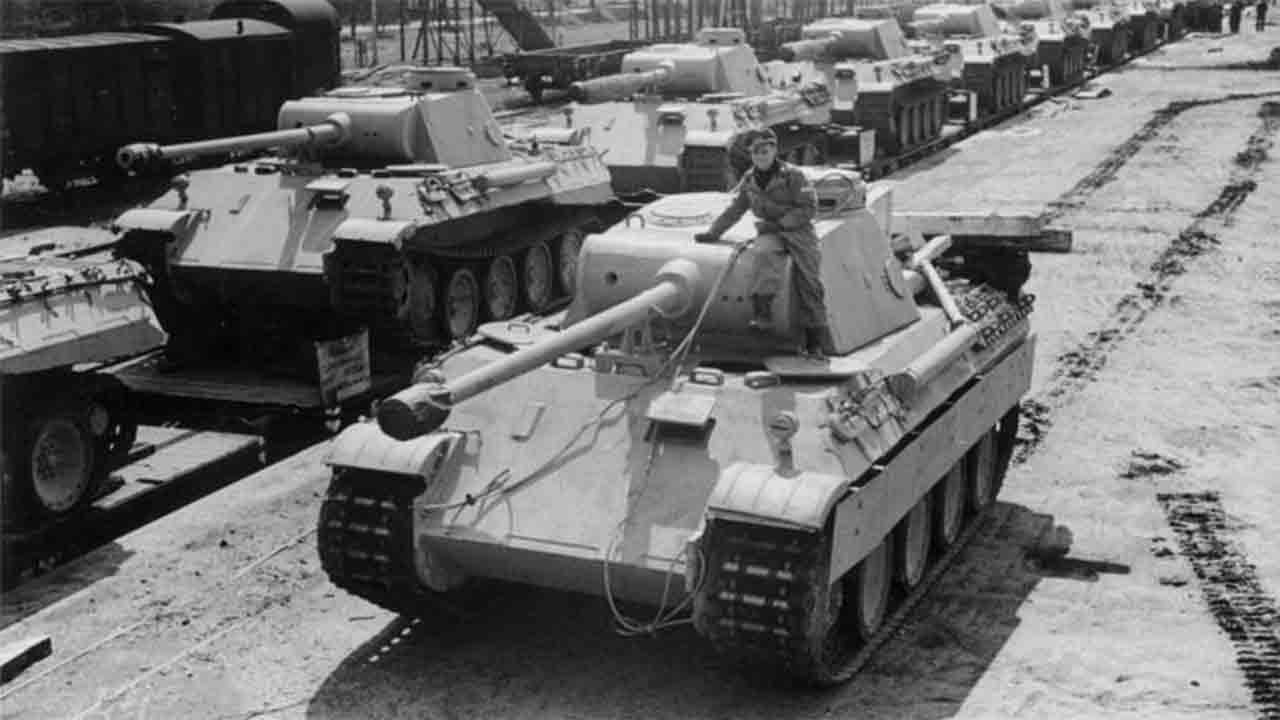
Developed in response to the Soviet T-34, the Panther combined effective sloped armor with a high-velocity gun, offering excellent firepower and protection. Despite its superior technical capabilities, it faced logistical and mechanical challenges that limited its battlefield effectiveness.
Tiger I:
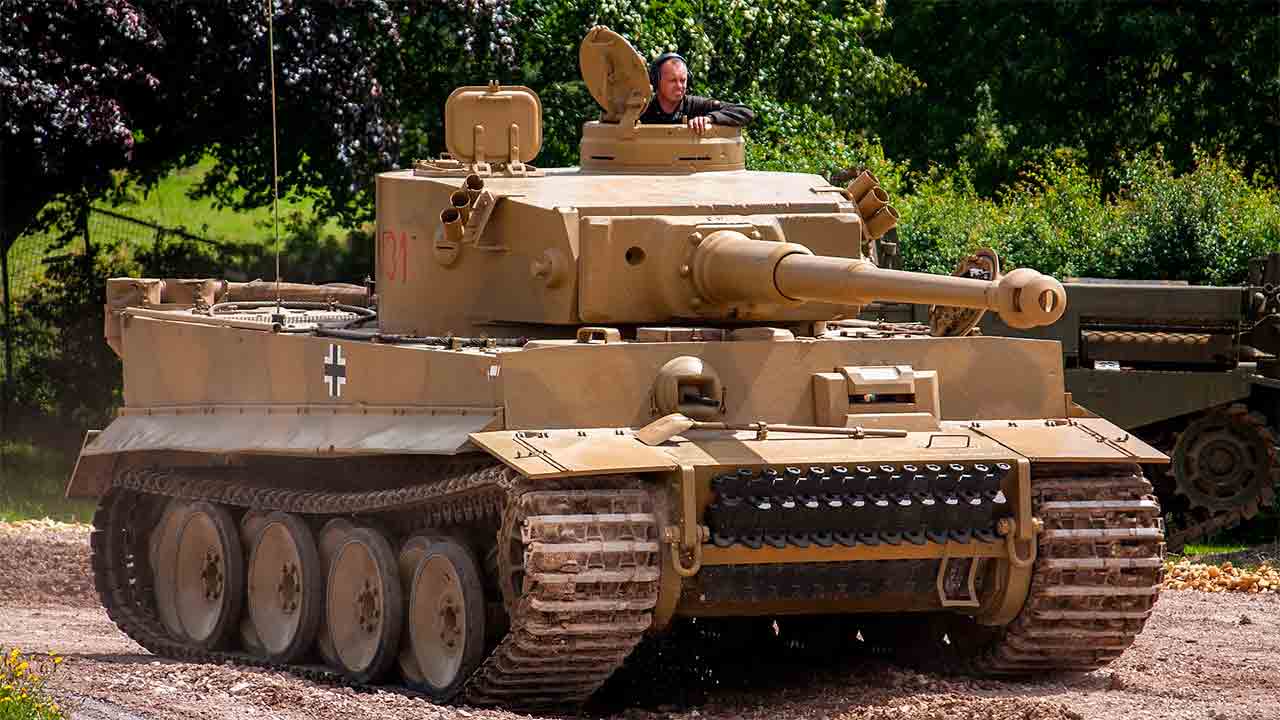
Known for its thick armor and feared 88 mm gun, the Tiger I could destroy most Allied tanks at long range. However, its high cost, mechanical complexity, and heavy fuel consumption restricted both its production and mobility.
The comparison between the T-34-85, Panther, and Tiger I reveals different approaches to tank engineering during World War II. While the Germans prioritized firepower and armor—resulting in technically superior but complex and expensive vehicles—the Soviets focused on mass production and operational simplicity. This strategy enabled the Soviet Union to maintain a significant numerical advantage, contributing to its success on the Eastern Front.
Photos: Wikimedia. This content was created with the help of AI and reviewed by the editorial team.
