
By Aelius Varro
Long before the empires, before the walls of Babylon and even before the first dynasties of Egypt, when the Tigris and Euphrates still seemed like open veins of the Earth itself, the Sumerians said that the sky was not empty. They said it was watching.
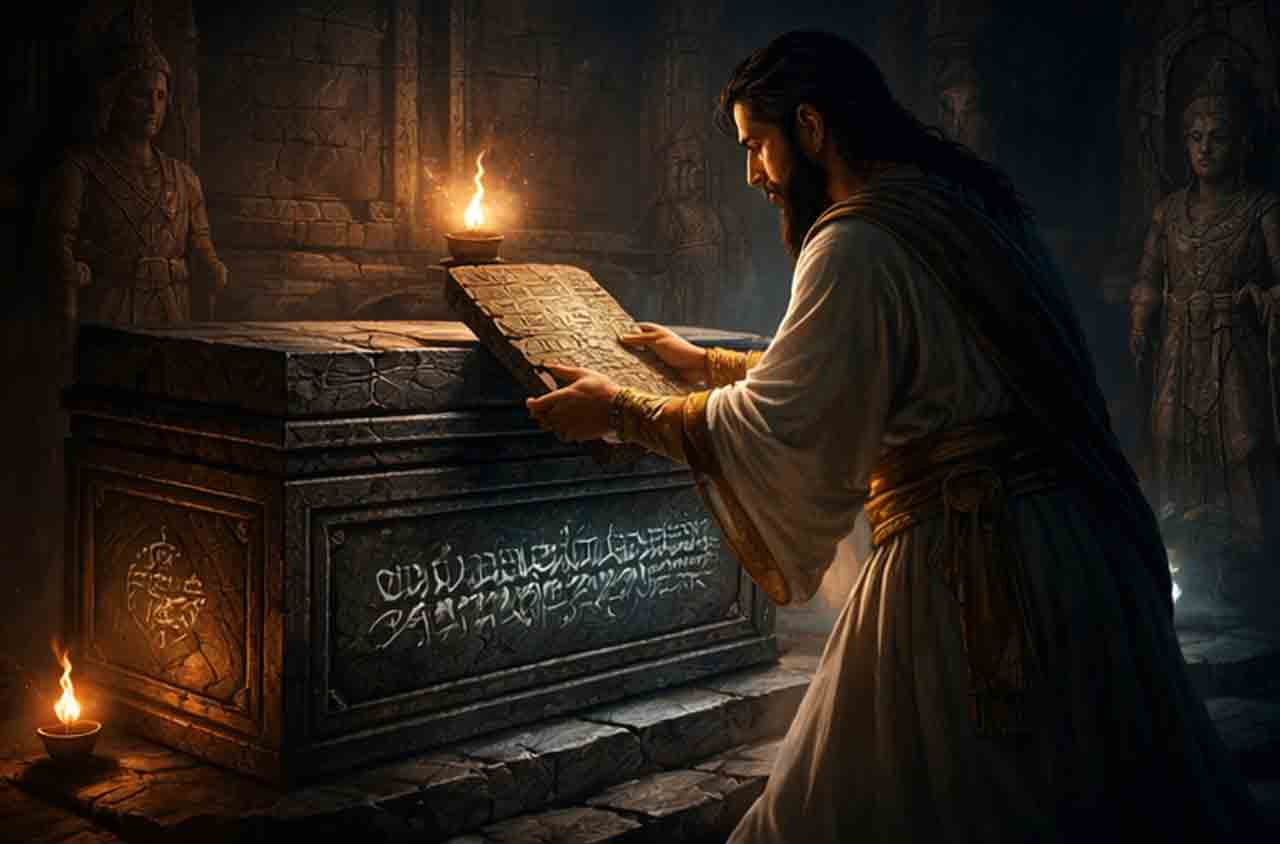
In a city of clay and stars called Eridu, there lived Enmerkar, a young scribe tasked with copying ancient tablets in the temple of Enki. His work was simple: to record harvests, births, and offerings. But on a night when the moon looked like a silver eye above the ziggurats, he was given a forbidden task.
A blind priest, wrapped in blue robes, placed before him a cracked tablet older than any known king.
“Do not read it aloud,” the old man warned. “These words came before the Flood.”
Enmerkar looked at the carved signs. They were not only Sumerian characters. There were strange forms among them, symbols that resembled stars, wings, and circles crossed by fire. As he translated, his blood ran cold.
The tablet said that in the earliest days, when men were still learning how to plant and call the rain by the names of the gods, beings descended from above in “chariots of light.” They did not come as conquerors, but as observers. The Sumerians called them Anunna, “those who from heaven to earth came.”
But the tablet said something even more terrible: not all of them were gods.
Some were messengers from a realm above the stars, servants of the One God who would much later be remembered by the Hebrews in sacred scrolls. They were sent to watch over the young Earth. Yet, fascinated by matter, by flesh, by the music of the rivers, and by the human desire to know, certain watchers broke the divine decree. They descended not only to observe, but to teach.
They taught astronomy, metallurgy, writing, and the calculation of celestial cycles. They taught how to raise towers that imitated sacred mountains. They taught how to turn stone into temple and copper into blade. And in doing so, they ceased to be mere messengers. They became rebels.
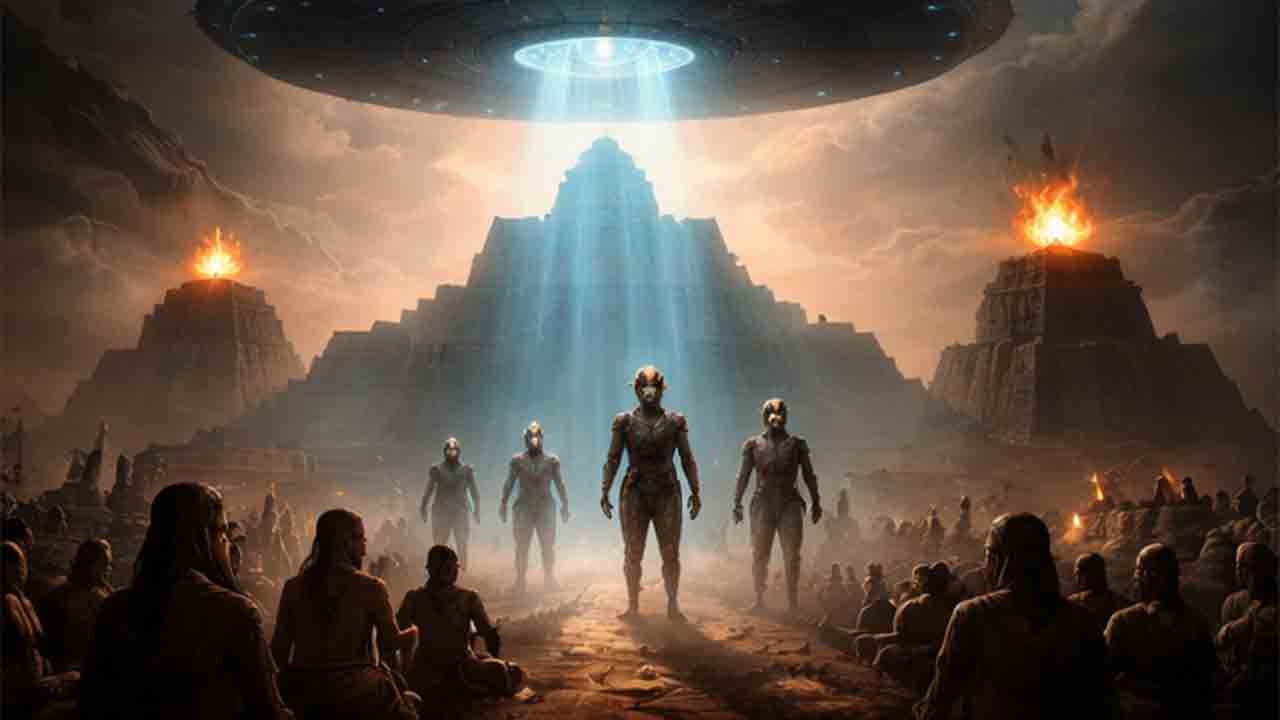
In Hebrew tradition, they would later be remembered as fallen angels. In the forgotten language of the first tablets, they were called Lumah, “those who brought the forbidden radiance.”
Enmerkar continued reading under the flickering light of the oil lamp. He then discovered that the Lumah did not have wings as artists of later centuries would imagine. Their “wings” were radiant discs, living machines of metal and fire, capable of cutting through the skies in silence. When they descended, the ancient people bowed, believing they were seeing the divine. And perhaps they were indeed seeing it — but a divinity corrupted by disobedience.
The tablet claimed that the Lumah altered the destiny of mankind. They mixed the sacred with the earthly. They created priest-kings who ruled in the name of the stars. And in secret, beneath the temples, they opened chambers where they tried to reproduce the spark of creation.
It was then that Enmerkar found the final part of the text, almost erased by time:
“And the God of Heaven saw that knowledge had been delivered before its time. And He sent the waters. And He covered the cities. And He broke the gates between the worlds. And He cast the rebels far away, some beneath the earth, others beyond the firmament.”
The young scribe lifted his eyes, trembling. The Flood. Not merely as punishment against men, but also as a war against those who had invaded human destiny.
That very night, the floor of the temple shook.
Outside, over the dark plain, a blue light appeared above the oldest ruins of Eridu. It was not a star. It was not the moon. It was a vast circle, spinning in silence, as though the past had returned to reclaim what it had lost.
The priests ran in panic. Some fell to their knees. Others shouted ancient names that should no longer be spoken. The old blind priest merely whispered:
“They heard the reading.”
The light cast a beam over the ziggurat, and for an instant Enmerkar saw shadows within it — tall figures, with eyes like cold embers, neither human nor fully monstrous. They did not come in peace. They had come for the tablet.
Instinctively, he clutched the cracked clay to his chest and ran through the corridors of the temple. Behind him, he heard stones splitting, cedar doors exploding, and a strange sound, like trumpets mixed with the desert wind.
In the underground chamber, he found the sealed room where the priests hid objects from the time before the Flood. At the center there was only an ark of black stone. Upon it was an inscription in Sumerian and in an even older language:
“What fell from heaven must never rule the Earth again.”
Enmerkar placed the tablet inside the ark and, as he sealed it, felt the entire ground tremble like an awakened heart. The light above the temple suddenly went out. Silence fell heavily upon the city.
At dawn, nothing remained in the sky but the ordinary sun. The priests told the people it had been an omen. Others swore they had seen the chariot of the gods. Some called it a miracle; others, a curse.
Enmerkar never spoke of the tablet again.
But years later, when different peoples began recording stories of watchers, giants, flaming chariots, and wars in the sky, he understood that the truth had survived in fragments.
The Sumerians wrote on clay.
The Hebrews, on scrolls.
Others, on stone.
All of them remembered something.
That, in the beginning, the sky opened.
And not everything that came down was holy.
